Energy Efficient Window Treatments for Manitoba Homes
How the right window treatments can cut heating and cooling costs in Manitoba — the best blinds, shades, and strategies for year-round energy savings.
Energy Efficient Window Treatments for Manitoba Homes
Manitoba homeowners know the reality — heating bills that spike in December and don’t come back down until April. While most people focus on furnaces, insulation, and weather stripping, windows are often the weakest link. Up to 25% of your home’s heating energy is lost through windows, and in a province where winter lasts six months, that adds up fast.
The right window treatments can significantly reduce that heat loss. Here’s what actually works.
How Window Treatments Save Energy
Windows are thin barriers between your heated home and the outside air. Even double-pane windows conduct heat — you can feel the cold radiating off glass on a -30°C day. Window treatments add an insulating layer that:
- Traps a pocket of still air between the blind and the glass, slowing heat transfer
- Blocks radiant heat loss — the warmth you feel leaving through the window
- Reduces drafts by covering gaps around the window frame
- Manages solar heat gain — keeping rooms cooler in summer without running the AC
The Most Energy-Efficient Blind Types
1. Honeycomb (Cellular) Blinds — The Gold Standard
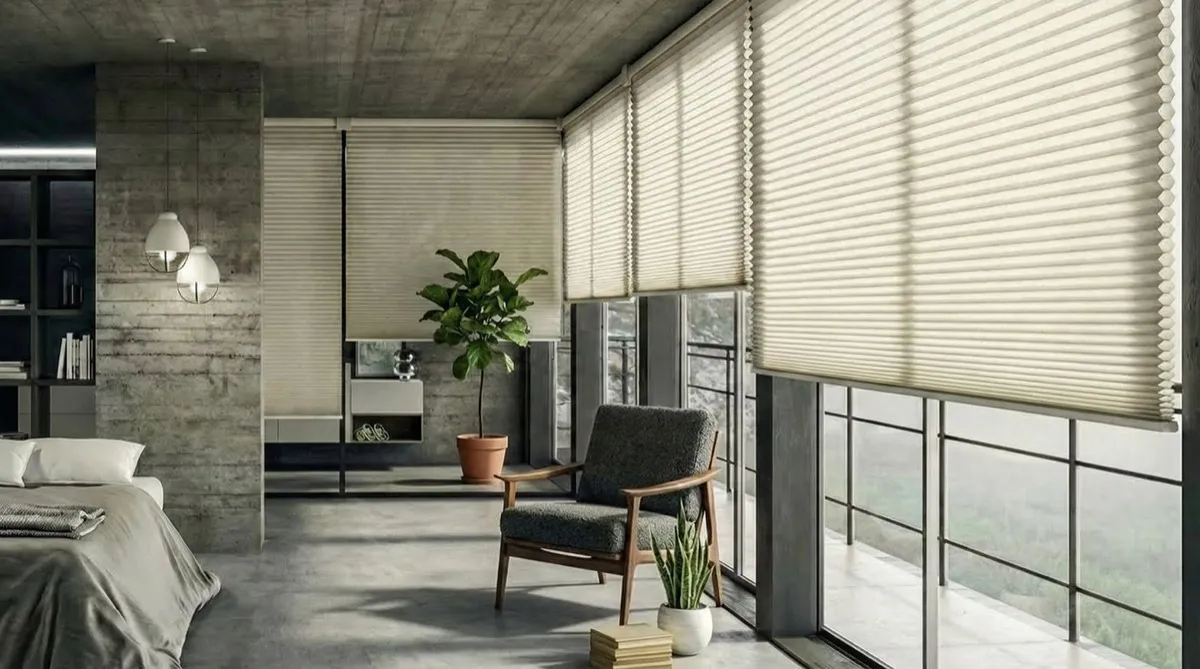
Honeycomb blinds are specifically engineered for thermal performance. Their cell structure creates air pockets that act as insulation.
Why they work best:
- Double-cell designs can reduce heat loss through windows by up to 50%
- Available in light-filtering and blackout fabrics
- The honeycomb structure works in both winter (retaining heat) and summer (blocking solar heat)
- Top-down/bottom-up control lets you insulate the lower portion while letting in daylight from above
For Manitoba homes, we recommend double-cell honeycomb blinds with blackout fabric in bedrooms and light-filtering fabric in living areas.
2. Blackout Roller Shades
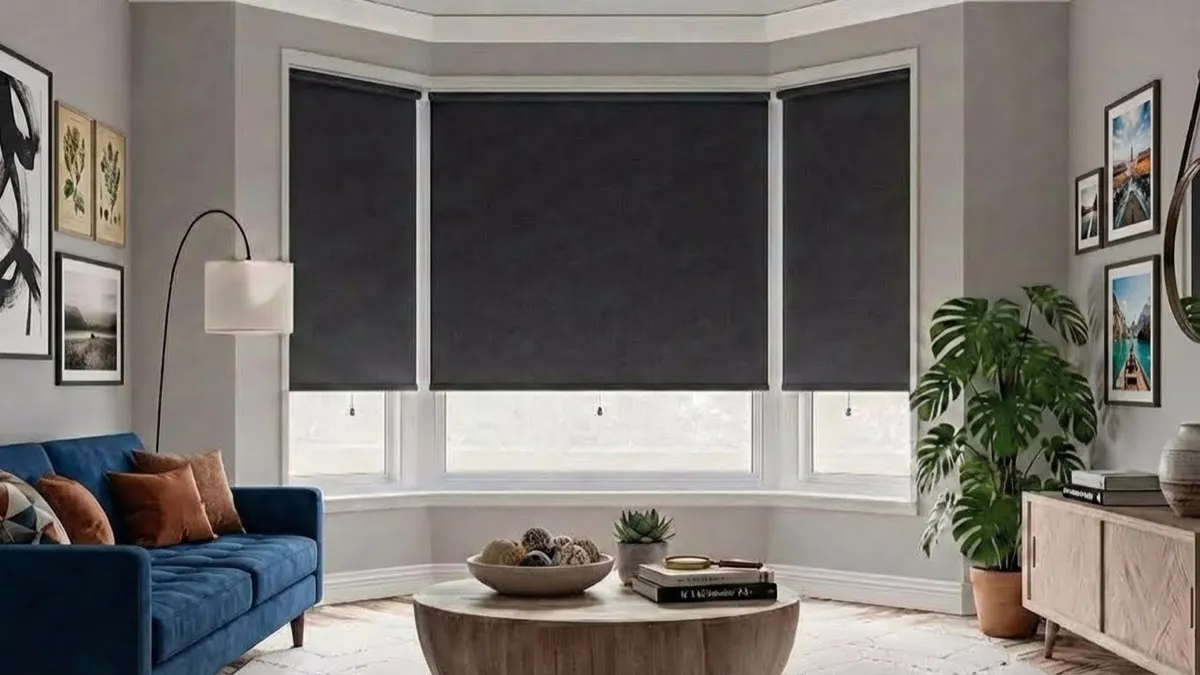
Blackout roller shades use thick, opaque material that acts as a solid barrier. They don’t have the cell structure of honeycomb blinds, but the dense fabric still provides meaningful insulation.
Best for: Bedrooms, media rooms, and any room where you want total darkness plus thermal benefit.
3. Solar Shades — Summer Energy Savers
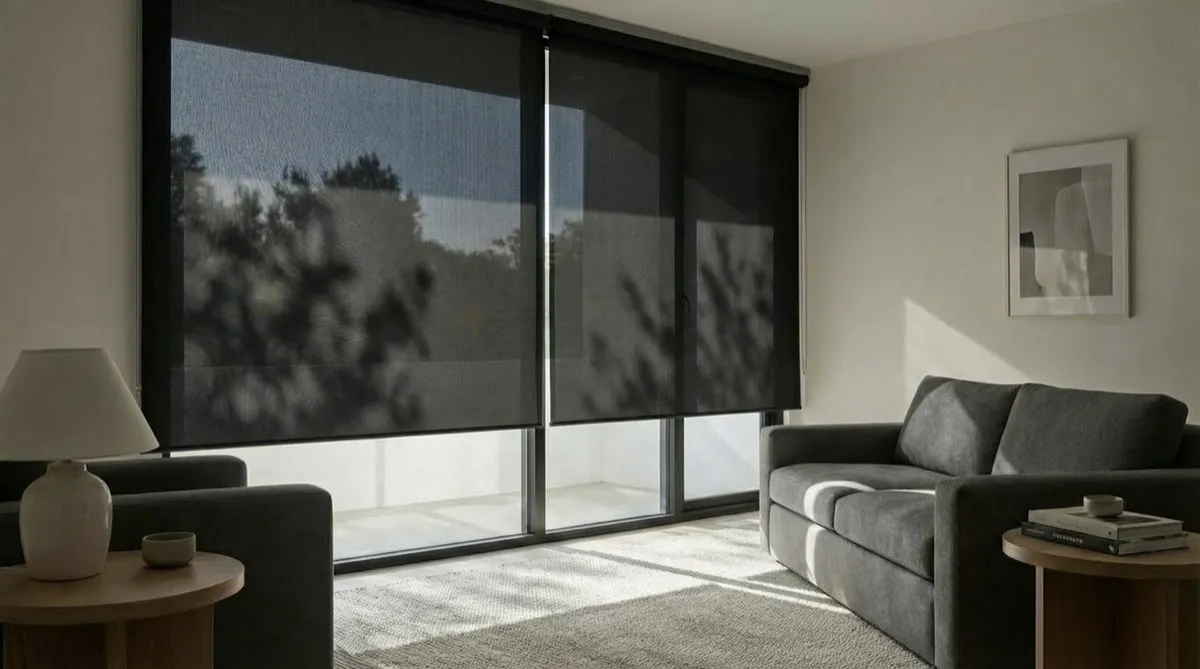
While honeycomb blinds are the winter champions, solar shades excel in summer. Their open-weave mesh blocks UV rays and solar heat gain while preserving your view — reducing the need for air conditioning during Winnipeg’s hot July and August days.
Best for: South and west-facing windows that get heavy afternoon sun.
4. Smart Blinds — Automated Efficiency
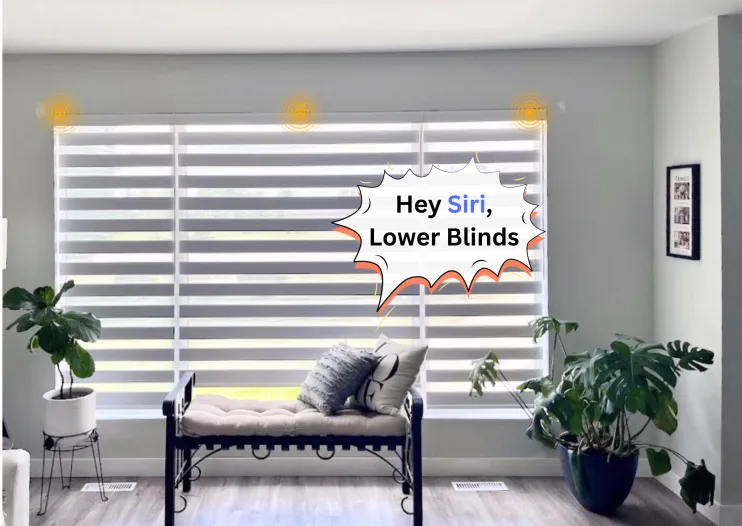
Any blind type becomes more energy-efficient when it’s motorized and automated. Smart blinds can:
- Open automatically when the sun hits your windows (free passive solar heating)
- Close at sunset to trap warmth before temperatures drop
- Respond to temperature sensors to adjust throughout the day
- Sync with weather forecasts for proactive adjustments
The energy savings from automation alone can reduce heating costs by up to 20%.
Strategies for Maximum Energy Savings
Custom Fit Matters
The single biggest factor in energy efficiency is fit. Off-the-shelf blinds leave gaps around the edges — gaps that let cold air circulate between the blind and the glass, defeating the purpose. Custom-fitted blinds built to your exact window dimensions create a tighter seal.
Layer Your Window Treatments
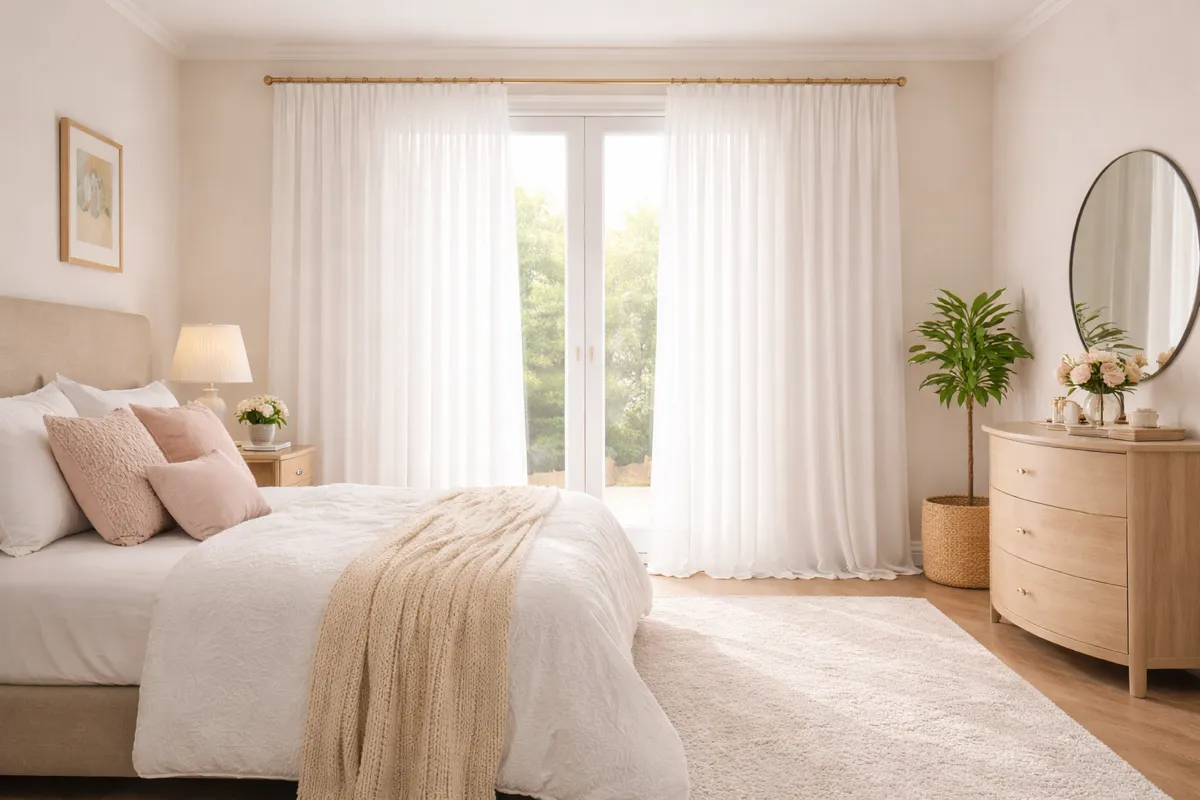
For maximum insulation in the coldest rooms (usually north-facing bedrooms), consider layering:
- Honeycomb blinds as the primary insulator
- Curtains or drapery as a second layer
- This combination can reduce window heat loss by over 60%
Manage Solar Gain by Direction
- South-facing windows: Open blinds on sunny winter days to capture free heat. Close at sunset.
- North-facing windows: Keep blinds closed most of the time in winter — these windows get little sun and lose the most heat.
- East/West-facing windows: Adjust based on time of day and season.
Don’t Forget Summer
Manitoba summers bring +30°C days with intense sun. Solar shades or light-filtering blinds on west and south-facing windows reduce solar heat gain, keeping your home cooler and reducing air conditioning costs.
The Numbers: What Can You Actually Save?
Energy savings depend on your home, windows, and current situation. But here are realistic estimates for a typical Winnipeg home:
- Honeycomb blinds on all windows: 10-25% reduction in heating costs
- Adding smart automation: Additional 5-15% savings from optimized timing
- Replacing old, damaged, or no window treatments: The biggest single improvement most homeowners can make
On a Winnipeg heating bill that runs $200-400/month in winter, even a 15% reduction is $30-60/month — the blinds pay for themselves within a few heating seasons.
What We Recommend
For Manitoba homes, our top recommendation is custom-fitted double-cell honeycomb blinds with smart controls. It’s the most effective combination of insulation and automation for our climate.
Every home is different, though. At Soho Blinds, we manufacture all our products locally in Winnipeg, so we understand exactly what Manitoba windows deal with. Book a free in-home consultation and we’ll assess your windows, discuss your goals, and recommend the right setup for your home.
Frequently Asked Questions
What are the most energy efficient blinds for Manitoba homes?
Double-cell honeycomb (cellular) blinds are the most energy efficient option for Manitoba homes. Their air-pocket structure can reduce window heat loss by up to 50%. Combined with smart automation, homeowners can save 15-25% on heating costs during Manitoba winters.
How much can window blinds save on heating bills in Winnipeg?
Honeycomb blinds on all windows can reduce heating costs by 10-25%. Adding smart automation provides an additional 5-15% savings. On a typical Winnipeg winter heating bill of $200-400/month, that is $30-60/month in savings — meaning the blinds pay for themselves within a few heating seasons.
Are solar shades good for Manitoba summers?
Yes. Solar shades are excellent for Manitoba summers. Their open-weave mesh blocks UV rays and solar heat gain while preserving your view, reducing the need for air conditioning during hot July and August days. They are best for south and west-facing windows.
Do custom-fitted blinds save more energy than off-the-shelf?
Yes. Custom-fitted blinds eliminate the gaps that off-the-shelf blinds leave around edges. These gaps allow cold air to circulate between the blind and glass, defeating the insulation purpose. A precise fit creates a tighter seal that significantly improves thermal performance.